Priced on the Bench: The Eight-Figure Auction for State Supreme Court Seats
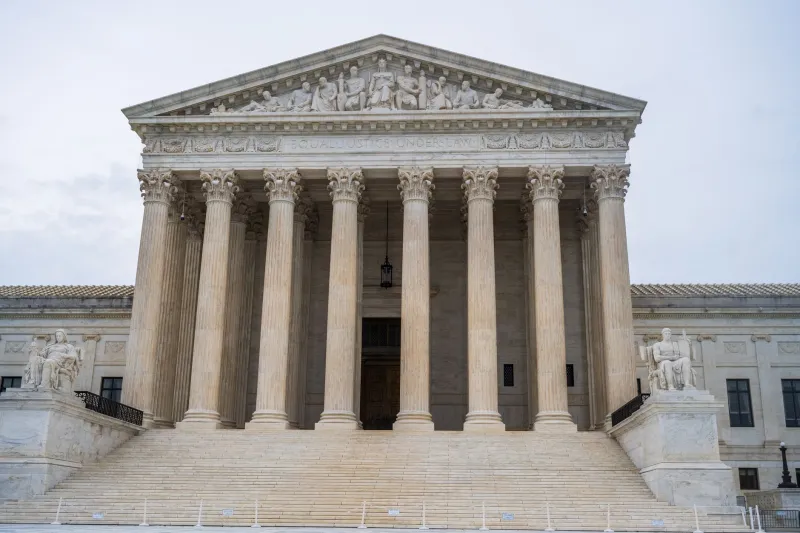
When Justice Janet Protasiewicz and former Justice Daniel Kelly squared off for a seat on the Wisconsin Supreme Court in 2023, the two campaigns and their outside allies spent roughly $56 million — a sum that dwarfed the price of many U.S. Senate contests. The prize was not a governorship or a Senate seat. It was a ten-year term on a court that would soon rule on the state's abortion ban and its legislative maps.
What happened in Madison is no longer an outlier. It is the template.
The Nationalization of the Bench
State supreme court elections were once sleepy, low-dollar affairs decided by bar association ratings and a few thousand dollars in lawn signs. No longer. National donor networks — on both the left and the right — now treat these races as proxy wars for the policy questions Congress and state legislatures have punted to the courts.
Ohio's 2022 and 2024 supreme court contests, effectively the decisive votes on the state's abortion restrictions and redistricting, drew spending in the tens of millions. In Texas, judicial races increasingly feature national political action committees air-dropping money into primaries that most residents of the state could not name a candidate in.
The pattern is straightforward: when a court's docket contains a billion-dollar question — a abortion ban, a congressional map, a damages cap — outside money arrives months before the case does.
Who Is Writing the Checks
Follow the money and the same institutional funders appear on both sides of the ideological ledger. National trial lawyer networks and abortion-rights organizations bankroll one side; chambers of commerce, school-choice advocates, and conservative judicial groups fund the other. Increasingly, the largest sums flow through entities that are not required to disclose their donors at all.
Dark-money vehicles — 501(c)(4) social welfare organizations and super PACs with deliberately bland names — account for a growing share of independent expenditures in judicial races. A state chamber of commerce affiliate can pour seven figures into a race without ever revealing whether its members include the corporations with cases pending before the very court it seeks to influence.
That is the structural problem. A justice who wins with eight figures of anonymous support is not necessarily corrupt. But the appearance of a debt — to donors the public cannot identify — is corrosive in a branch of government whose sole currency is legitimacy.
Rulings With Receipts
The consequences are not hypothetical. State supreme courts now render the final word on abortion access in roughly half the states, on the drawing of legislative maps that determine congressional control, and on tort rules that govern civil litigation worth hundreds of billions annually. Justices elected in these funded contests routinely face recusal motions tied to campaign spending — and just as routinely deny them.
In states including Wisconsin and West Virginia, litigants have argued that a justice who benefited from spending by a party's allies should step aside from that party's case. The recusal standards in most states remain voluntary, leaving each justice to judge the taint of their own election.
Can Disclosure Catch Up?
Reform proposals circulate in a handful of states: lowering the threshold for independent-expenditure disclosure, requiring top funders to be named in advertisements, extending recusal rules to cover major campaign benefactors. A few legislatures have acted. Most have not — for the obvious reason that the legislators drafting the rules are products of the same money ecosystem.
Federal courts have made the task harder. Post-Citizens United jurisprudence treats independent expenditures as protected speech, and disclosure requirements face skeptical review. The result is a disclosure regime built for the 1970s applied to a spending environment of the 2020s.
The bench was designed to be the branch insulated from the marketplace. Each election cycle, that insulation is being purchased away — seat by seat, state by state — and the public is rarely told who is holding the invoice.