The Consultants at the Catastrophe: How Private Firms Turned Federal Disaster Policy Into a Revenue Stream
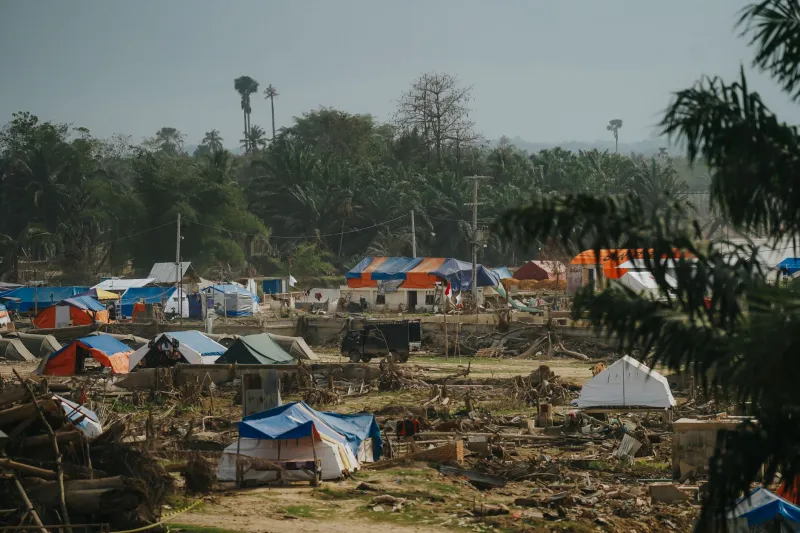
In the weeks following a major hurricane, the visible symbols of federal response are familiar: FEMA trailers, National Guard convoys, emergency housing vouchers. Less visible — but arguably more consequential — are the management consultants who, in many cases, designed the protocols governing every aspect of that response years before the storm made landfall.
A VIS News investigation has found that the architecture of America's federal disaster response and recovery policy has been substantially outsourced to a small cluster of major consulting firms, each of which maintains active commercial relationships with the industries that profit most directly when disasters occur and recovery spending begins to flow.
The Consulting Firms and Their Federal Footprint
Over the past two decades, the Federal Emergency Management Agency has awarded billions of dollars in contracts to management consulting firms for services ranging from strategic planning and protocol development to post-disaster damage assessment and recovery program administration. The firms holding the largest shares of this work include several of the most recognizable names in global consulting — organizations whose client rosters span virtually every sector of the American economy.
Federal contracting records reviewed by VIS News show that the top recipients of FEMA consulting contracts between 2005 and 2023 collectively received more than $4.2 billion in awards. The scope of work covered under those contracts extended well beyond logistical support: consulting firms were engaged to draft operational frameworks, design grant allocation methodologies, develop resilience investment criteria, and train agency staff in the protocols the firms themselves had written.
In effect, the private sector was being paid to define the rules by which public disaster money would be spent — and then, in many instances, paid again to administer those rules.
Clients on Both Sides of the Disaster
The conflict embedded in this arrangement becomes visible when one examines the full scope of the consulting firms' commercial relationships. The same organizations advising FEMA on reconstruction grant criteria maintain active engagements with construction companies that compete for post-disaster rebuilding contracts. Firms helping design federal flood insurance program reforms count property and casualty insurers among their most significant clients. Consultants shaping federal resilience investment frameworks have advised real estate developers whose acquisition strategies are explicitly oriented toward post-disaster land markets.
None of these relationships are hidden. They are disclosed, in varying degrees of specificity, in corporate filings, marketing materials, and the occasional congressional testimony. What has not been systematically examined is how the simultaneous presence of these relationships shapes the policy outputs that consulting firms deliver to the federal government.
"These firms have mastered the art of presenting themselves as neutral technical advisors," said one former FEMA official who left the agency in 2019 and spoke with VIS News on background. "But neutral is exactly what they aren't. Their business model depends on being indispensable to everyone in the ecosystem — the government, the insurers, the contractors, the developers. And when everyone is your client, your advice tends to preserve the conditions that keep everyone in business."
Protocol Design as Market Architecture
The specific mechanisms through which consulting firm advice shapes disaster recovery outcomes are technical but consequential. Grant eligibility criteria determine which categories of damage receive federal reimbursement and which do not — a determination that directly affects the profitability of different insurance products and the competitive positioning of different construction contractors. Resilience investment frameworks establish which types of infrastructure improvements qualify for federal funding, channeling hundreds of millions of dollars toward specific technologies, materials, and service providers.
In several documented instances reviewed by VIS News, FEMA planning documents that were substantially drafted by consulting firms under contract contained framework elements that aligned closely with the commercial interests of those firms' private sector clients. In one case involving flood resilience criteria developed following a major Gulf Coast hurricane, the technical specifications embedded in a FEMA-adopted framework corresponded precisely with the service offerings of a technology company that was, at the time, a client of the consulting firm that drafted the criteria.
FEMA, contacted by VIS News for comment, stated that all contractors are subject to organizational conflict of interest requirements and that the agency conducts due diligence on potential conflicts before awarding contracts. The agency did not respond to specific questions about the cases identified in this investigation.
The Accountability Deficit
The outsourcing of disaster policy design to private consultants creates an accountability structure that is difficult for the public — and even for Congress — to penetrate. When a FEMA protocol produces outcomes that disadvantage survivors or channel recovery funds toward well-connected contractors, the chain of responsibility is deliberately diffuse.
The consulting firm that designed the protocol is a private company, not subject to the same transparency requirements as the federal agency. The agency officials who commissioned and approved the work can point to the contractor as the source of the technical judgments. Congressional oversight, when it occurs, typically focuses on agency decisions rather than the contractor recommendations that shaped them.
"You've created a system where nobody is accountable for the actual policy," said one congressional aide who has worked on disaster recovery oversight for more than a decade. "The agency says it followed the consultant's recommendations. The consultant says it gave the agency options to choose from. And the people in flooded houses are still waiting for their checks."
The Survivor Calculus
The human dimension of this structural problem is most legible in the aftermath of specific disasters. Following Hurricane Maria in Puerto Rico, Hurricane Harvey in Texas, and the 2021 flooding in Louisiana, federal recovery programs designed in part by consulting firms with commercial ties to the construction and insurance industries produced outcomes that academic researchers and government auditors alike characterized as systematically underserving the most vulnerable survivors.
Small homeowners, renters, and residents of informal or substandard housing — the populations least able to navigate complex grant application processes — received disproportionately small shares of recovery funding relative to commercial property owners and large-scale developers. The grant criteria and administrative processes that produced those outcomes were, in each case, developed with significant consulting firm involvement.
Reforming the Framework
Several policy researchers and former government officials interviewed by VIS News argued that the problem is not consulting firm participation in disaster policy per se, but the absence of structural safeguards governing that participation. Mandatory disclosure of all commercial client relationships relevant to a contract's subject matter, prohibition on simultaneous engagement with both government and private sector parties in the same disaster ecosystem, and independent review of framework documents before adoption were among the reforms most frequently cited.
Without such safeguards, the current arrangement will continue to function as it has: generating substantial returns for the firms positioned at the intersection of public need and private capital, while the communities that disaster policy is ostensibly designed to serve wait for a recovery that arrives, if at all, on terms they had no part in writing.