From the House Floor to the Lobbying Corridor: How Congress Became a Recruitment Pipeline for K Street
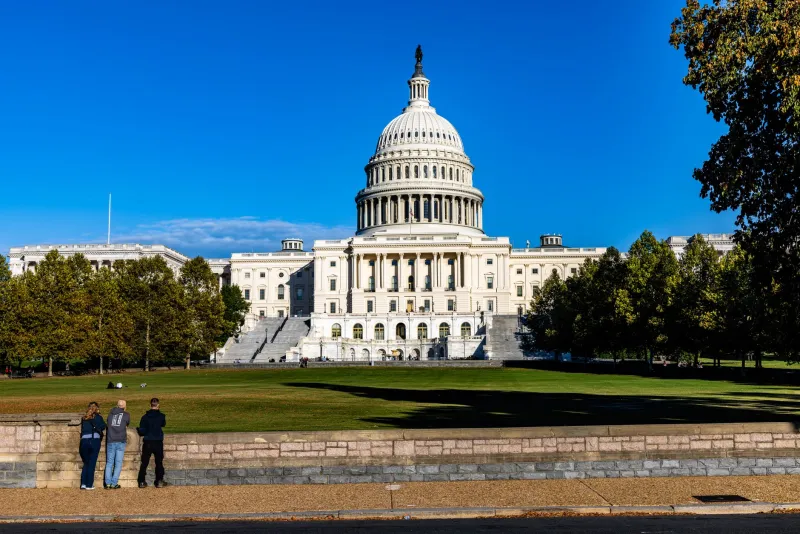
When a member of Congress loses a reelection bid or chooses not to seek another term, the conventional narrative frames it as a return to private life. The data tells a different story. For a substantial and growing share of former legislators, leaving Capitol Hill is not a retirement — it is a promotion.
VIS News conducted an extensive review of lobbying disclosure records, campaign finance filings, and congressional committee assignments spanning the last twenty years. What emerged is a portrait of a system in which the skills, relationships, and institutional access accumulated during a congressional career are routinely monetized within months of a lawmaker's final vote.
The Numbers Behind the Exits
According to data compiled from the Senate Office of Public Records and the House Clerk's office, more than 430 former members of Congress registered as lobbyists between 2000 and 2023. That figure represents roughly half of all members who left office during that period and subsequently entered the private sector in any capacity. The proportion has climbed steadily: in the early 2000s, approximately one in three departing legislators eventually registered to lobby; by the 2010s, that ratio had narrowed to nearly one in two.
The financial rewards are substantial. Senior lobbying positions at established Washington firms routinely carry base compensation packages between $300,000 and $2 million annually — figures that dwarf the $174,000 congressional salary most members earn. For those who ascend to named partnerships or launch their own shops, earnings can exceed those sums considerably.
The Honest Leadership and Open Government Act of 2007 imposed a two-year cooling-off period for senators and a one-year restriction for House members before they may directly lobby their former colleagues. Critics argue these waiting periods function less as genuine barriers than as structured sabbaticals, during which former lawmakers often serve as "strategic advisers" — a designation that permits substantial behind-the-scenes influence without triggering formal registration requirements.
Committee Assignments as Career Auditions
Perhaps the most revealing finding in VIS News's analysis concerns the relationship between a legislator's committee history and the industry that subsequently employs them. The correlation is not incidental — it is systematic.
Former members who served on the Senate Finance Committee or the House Ways and Means Committee — bodies with jurisdiction over tax policy — are disproportionately recruited by financial services firms, private equity houses, and major accounting conglomerates. Those who sat on the Senate Armed Services Committee or House Armed Services Committee appear with striking frequency on the payrolls of defense contractors and aerospace manufacturers. Members who spent time on committees overseeing telecommunications and technology regulation have been reliably absorbed by the major carriers and platform companies that those same committees once scrutinized.
The pattern holds across party lines. A Republican who championed deregulation on the House Energy and Commerce Committee is as likely to land at a utility lobbying firm as a Democrat who cultivated relationships with pharmaceutical executives during years on the Senate Health, Education, Labor and Pensions Committee. Industry appears largely indifferent to partisan affiliation when acquiring access.
"What you're buying when you hire a former member isn't their policy expertise," said one veteran Washington lobbyist who spoke on background, citing professional sensitivities. "You're buying their phone being answered. You're buying a conversation that an outside lobbyist simply cannot have."
The Soft Corruption Problem
Legal scholars and ethics watchdogs have long wrestled with what some call the soft corruption embedded in this arrangement — conduct that violates no statute yet distorts legislative incentives in measurable ways.
The concern is straightforward: if a sitting senator understands, even implicitly, that a favorable regulatory posture toward a particular industry may translate into a lucrative post-congressional career within that industry, the integrity of that senator's oversight function is compromised before any offer is extended. No explicit agreement need exist. The anticipation of reward, operating quietly beneath the surface of every committee hearing and floor vote, may be sufficient to bend judgment.
Research published by the political scientists who study legislative behavior has found that members in their final terms — those who have announced retirement or who face difficult reelection landscapes — exhibit measurably different voting patterns on industry-relevant legislation compared with members who plan to continue seeking office. The divergence is modest but statistically consistent, and it runs in the direction one would predict if post-congressional employment prospects were influencing decision-making.
Firms That Have Perfected the Playbook
Certain lobbying enterprises have refined the practice of congressional recruitment into something approaching a formal business model. Firms such as Brownstein Hyatt Farber Schreck, Akin Gump Strauss Hauer & Feld, and a cluster of boutique shops that orbit them have assembled rosters populated heavily with former legislators, former chiefs of staff, and former senior committee counsel.
The value proposition these firms sell to corporate clients is explicit: access to the people who write the rules, delivered by people who once wrote them. In pitch materials reviewed by VIS News — obtained through sources familiar with their contents — at least two major lobbying operations listed the committee backgrounds and floor leadership histories of their former-member partners as primary selling points, presented alongside retainer fee schedules.
This is not an underground economy. It operates in plain sight, disclosed in quarterly filings and announced in press releases celebrating the arrival of each new congressional alumnus. Its visibility, paradoxically, may be among the reasons sustained reform has proven so difficult to achieve.
Reform Efforts That Have Stalled
Proposals to extend cooling-off periods, broaden the definition of lobbying activity to capture advisory roles, or impose lifetime bans on certain categories of post-congressional employment have circulated in Congress for years. They have uniformly failed to advance — a fact that critics note is difficult to disentangle from the reality that the legislators empowered to pass such reforms are the very individuals who stand to benefit from the status quo.
The American Anti-Corruption Act, a package championed by advocacy organizations including Represent.Us, would impose a lifetime ban on lobbying by former members of Congress. It has attracted co-sponsors in successive Congresses but has never received a floor vote in either chamber.
A Pipeline That Shows No Signs of Narrowing
The 2024 election cycle produced another cohort of departing lawmakers — members who retired, lost primaries, or fell in general election contests — and K Street has already begun its customary absorption process. Lobbying disclosure filings from early 2025 confirm that several members of the 118th Congress have registered or are in the process of registering as lobbyists, while others have accepted advisory or executive roles at trade associations and corporate affairs offices.
The revolving door, a metaphor so familiar it risks losing its capacity to disturb, continues to spin. What the data underlying that metaphor reveals is less a series of individual choices than a structural feature of American political life — one in which public service and private enrichment have grown so intertwined that distinguishing between the two requires deliberate and sustained effort.
For the constituents who sent these men and women to Washington, the question that lingers is an uncomfortable one: at the moment of the decisive vote, whose interests were being served?